
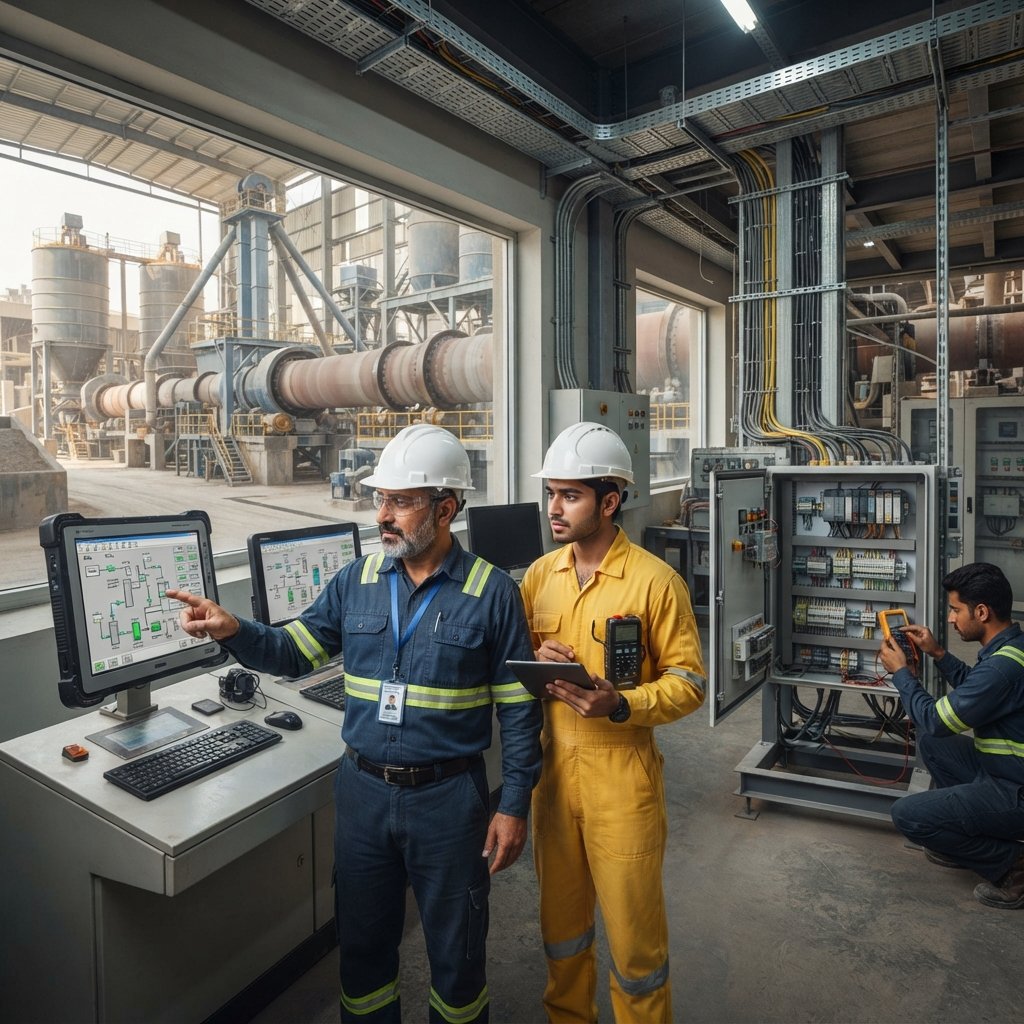
Reliable electrical infrastructure is essential for every industrial facility. Manufacturing plants, power facilities, cement plants, oil and gas installations, chemical factories, and other process industries depend on electrical systems to operate motors, drives, control equipment, instrumentation, and production machinery.
A properly engineered electrical system helps improve plant reliability, operational safety, and energy performance.
Key Components of Industrial Electrical Systems
Industrial electrical infrastructure can include:
- Medium-voltage systems
- Low-voltage distribution
- Switchgear
- MCCs
- PCCs
- Transformers
- Variable Frequency Drives
- UPS systems
- Protection systems
- Electrical control panels
- Industrial power distribution networks
Each component must be selected and integrated according to the plant’s load requirements, operating environment, protection requirements, and expansion plans.
Medium- and Low-Voltage Systems
Medium-voltage systems are commonly used to distribute electrical power throughout large industrial facilities.
Low-voltage systems distribute power to equipment, motors, control panels, lighting, instrumentation, and other plant loads.
Proper coordination between MV and LV systems is important for safe and reliable power distribution.
Switchgear and Motor Control Centers
Switchgear provides protection, isolation, switching, and control within electrical distribution systems.
Motor Control Centers (MCCs) are commonly used to control and protect industrial motors. They can incorporate motor starters, protection devices, VFDs, and control equipment.
Well-designed MCC and switchgear systems make maintenance and troubleshooting more efficient while supporting reliable plant operation.
Variable Frequency Drives
VFDs are widely used to control motor speed and torque in industrial applications.
By controlling motor speed according to process demand, VFDs can provide operational flexibility and, in suitable applications, help reduce energy consumption.
They are commonly used with pumps, fans, conveyors, compressors, and other rotating equipment.
UPS and Critical Power
Some industrial systems cannot tolerate interruptions in power.
UPS systems can provide backup power to critical control systems, instrumentation, communication equipment, servers, and other essential loads.
For automation-dependent facilities, reliable backup power can help protect processes and reduce the impact of electrical disturbances.
Electrical Engineering and Automation Integration
Modern industrial plants require electrical and automation systems to work together.
Electrical equipment, motor control, PLC systems, DCS, SCADA, instrumentation, and industrial networks must be properly coordinated to achieve reliable operation.
This is why electrical engineering should be considered as part of the overall plant automation and control strategy rather than as a completely separate discipline.
Engineering Support from Easy Automation Engineering
Easy Automation Engineering provides electrical engineering and industrial solutions covering MV/LV systems, switchgear, MCC/PCC systems, VFDs, UPS systems, control panels, commissioning, maintenance, and technical support.
Our engineering capabilities support industrial clients from project planning and procurement through installation, testing, commissioning, and ongoing maintenance.
Conclusion
A reliable electrical system is the backbone of modern industrial operations. Proper engineering, equipment selection, protection, testing, commissioning, and maintenance can help industrial facilities achieve safer and more dependable operations.
Planning an electrical upgrade or industrial power project? Contact Easy Automation Engineering for electrical engineering, equipment supply, commissioning, and maintenance support.